Vermicompost for Terrace Garden
Vermicompost for terrace garden is widely used by home gardeners because it improves soil fertility, enhances root growth, and provides natural nutrients required for healthy plant development. The same benefits make vermicompost an excellent organic fertilizer for indoor plants, balcony gardens, and container gardening.
Unlike chemical fertilizers that provide quick nutrients but may not improve soil quality, vermicompost creates a healthy growing environment by increasing beneficial microorganisms and improving soil structure.
This complete guide explains how to use vermicompost for indoor plants, application methods, benefits, quantity requirements, and common mistakes to avoid.
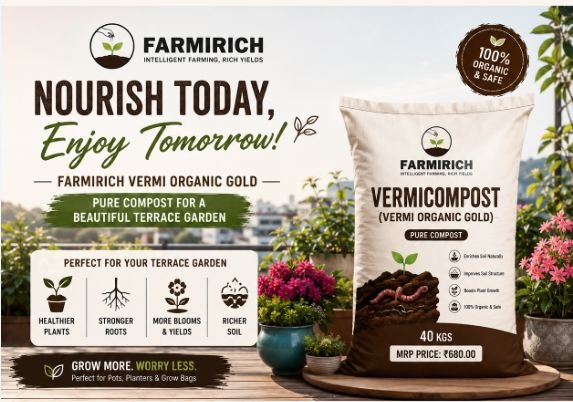
Why Use Vermicompost for terrace Garden?
Indoor plants grow in limited containers where nutrients get exhausted faster compared to plants grown in open soil.
Adding organic compost helps maintain long-term soil fertility.
Improves Soil Quality Naturally
Indoor plants often suffer from compact soil due to repeated watering. Vermicompost loosens the soil structure and improves air circulation around roots.
Healthy soil allows plants to absorb nutrients efficiently.
Provides Slow Release Plant Nutrition
Vermicompost releases nutrients slowly, supplying plants with continuous nourishment.
It contains:
- Nitrogen for leaf growth
- Phosphorus for root development
- Potassium for plant strength
- Micronutrients for healthy growth
Enhances Root Growth and Plant Development
Strong roots are essential for indoor plants. Vermicompost encourages root expansion, helping plants absorb water and nutrients effectively.
Benefits of Vermicompost for Terrace Garden Plants.
Using organic compost regularly provides multiple benefits.
Promotes Healthy Green Leaves
Indoor plants like money plants, snake plants, peace lilies, and areca palms require balanced nutrition for vibrant foliage. Vermicompost supplies natural nutrients that support better leaf growth
Improves Water Holding Capacity
Indoor pots dry faster because of limited soil volume.
Vermicompost increases moisture retention, reducing plant stress caused by irregular watering.
Supports Beneficial Soil Microorganisms
Healthy microorganisms improve nutrient availability and create a natural ecosystem inside the pot.
Reduces Dependency on Chemical Fertilizers
Organic compost helps maintain sustainable gardening practices and supports chemical-free plant care.
How to Use Vermicompost for Terrace Garden?
Correct application is important to achieve maximum results.
Method 1 – Mixing Vermicompost With Potting Soil
For new indoor plants, prepare a healthy potting mixture:
Recommended ratio:
- 40% garden soil
- 30% vermicompost
- 20% cocopeat
- 10% sand/perlite
This mixture provides nutrients, drainage, and moisture balance.
Method 2 – Top Dressing Existing Indoor Plants
For already growing plants:
Step-by-step method:
- Remove the top 2–3 inches of soil.
- Add vermicompost around the plant base.
- Mix gently with soil.
- Water the plant.
Repeat application every 25–30 days.
Method 3 – Using Vermicompost Tea (Vermiwash)
Vermicompost tea (vermiwash) is a liquid fertilizer prepared by mixing compost with water.
Benefits:
- Provides quick nutrients
- Improves microbial activity
- Helps weak plants recover
It can be applied to flowering plants, foliage plants, and vegetables
How Much Vermicompost Should Indoor Plants Need?
The quantity depends on pot size and plant requirements
Small Indoor Pots:
For 6–8 inch pots:
Use approximately:
50–100 grams vermicompost every month
Suitable plants:
- Money plant
- Snake plant
- Small flowering plants
Medium Size Pots
For 10–14 inch pots:
Use:
150–300 grams vermicompost every month
Suitable for:
- Areca palm
- Peace lily
- Hibiscus
- Jasmine
Large Grow Bags and Terrace Plants
For large containers:
Use:
500 grams to 1 kg depending on plant size
Suitable for:
- Tomato
- Chilli
- Brinjal
- Fruit plants
Best Terrace & Indoor Plants That Grow Well With Vermicompost
Vermicompost can be used for various indoor and terrace plants.
Foliage Plants:
Examples:
- Money plant
- Snake plant
- ZZ plant
- Areca palm
- Rubber plant
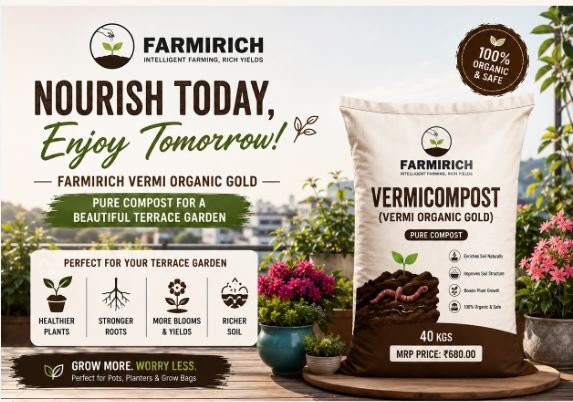
Flowering Indoor Plants
Examples:
- Peace lily
- Anthurium
- Jasmine
- Rose
Indoor Vegetable Gardening Plants
Examples:
- Herbs
- Coriander
- Mint
Curry leaves
Common Mistakes While Using Vermicompost for Terrace Garden
Adding Too Much Compost
Excess compost can reduce soil drainage and affect plant health.
Always follow recommended quantities.
Using Unprocessed Compost
Only use properly matured vermicompost.
Fresh compost may contain unwanted materials that can harm plant roots.
Ignoring Drainage Requirements
Indoor plants need proper drainage holes to prevent root damage.
Not Maintaining Regular Feeding
Plants growing in pots require continuous nutrient replacement
Can Vermicompost Help Terrace and Apartment Gardening?
Yes, vermicompost is highly beneficial for apartment gardening because urban gardeners often grow plants in:
- Pots
- Grow bags
- Balcony gardens
- Terrace gardens
- Vertical gardens
Limited soil availability makes organic soil improvement essential.
Using quality vermicompost helps homeowners grow healthier plants naturally even in small spaces.
Frequently Asked Questions About Vermicompost for Terrace Garden
Is vermicompost good for indoor plants?
Yes, vermicompost is an excellent organic fertilizer for indoor plants because it improves soil fertility, root growth, and nutrient availability.
How often should I add vermicompost to indoor plants?
Most indoor plants benefit from vermicompost application once every 25–30 days.
Can vermicompost replace chemical fertilizer?
Yes, vermicompost can replace chemical fertilizers for many indoor and terrace gardening applications.
Does vermicompost increase plant growth?
Yes, vermicompost improves soil conditions and provides essential nutrients that support healthy plant growth.
Which is better for terrace gardening: compost or vermicompost?
Vermicompost is considered one of the best organic fertilizers because it contains beneficial microbes and improves soil structure.
Final Conclusion:
Grow Healthy Plants Naturally With Vermicompost
Healthy plants start with healthy soil. Whether you maintain indoor plants, balcony gardens, or terrace farms, adding organic compost improves plant growth naturally.
Vermicompost for terrace garden provides essential nutrients, improves soil quality, increases moisture retention, and supports sustainable gardening practices. By using the correct quantity and application method, homeowners can create greener spaces with healthier plants while reducing dependence on chemical fertilizers.